The term leasing originates from the English verb to lease, which means to provide or obtain an asset for rent.
Leasing is an activity that involves acquiring fixed assets and providing them to individuals or legal entities under predetermined terms and for specified periods.
According to the applicable legislation of the Republic of Armenia (Articles 677–684 of the Civil Code), financial lease (leasing) is defined as a process whereby, under a leasing agreement, the Lessor undertakes to acquire ownership of the property specified by the Lessee from a Seller selected by the Lessee and to transfer it to the Lessee for temporary possession in exchange for payment.
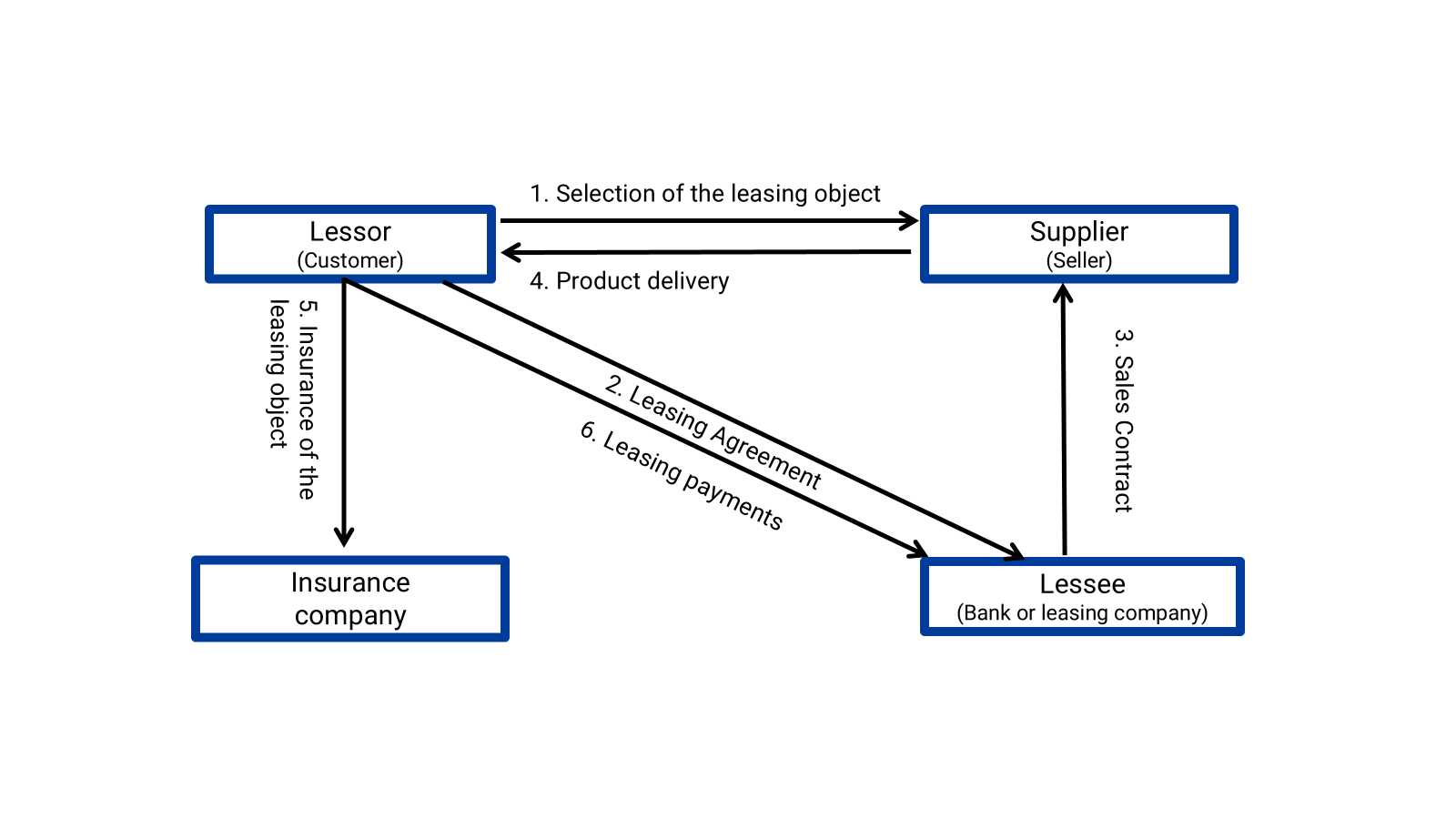
This form of investment financing is attractive to the lessee, as it eliminates the need to purchase the leased asset through a one-time payment and helps avoid losses associated with the rapid obsolescence of fixed assets.
Under a financial lease (leasing) agreement, the lessor agrees to acquire ownership of the property specified by the lessee from a seller selected by the lessee and to transfer it to the lessee for temporary possession in exchange for payment. In this case, the lessor bears no responsibility for the selection of the leased asset or the seller.
Leasing |
||
|---|---|---|
For prospective customers |
For Banks and Credit Institutions |
For Vendors and Suppliers |
| 1. The opportunity to use assets and generate income from them throughout the term of the leasing agreement without holding ownership rights. 2. The opportunity to recognize the fixed asset on the company’s balance sheet, record all related expenses, offset VAT, and benefit from other applicable accounting arrangements. 3. The opportunity for the guaranteed transfer of ownership to the Lessee. 4. Short- and medium-term financing for business development. 5. Special discounts and offers available under agreements concluded with Supplier companies. 6. Financing terms aligned with the asset’s depreciation period and useful life. |
1. No funds are disbursed directly to the Lessee, either in cash or by bank transfer, resulting in lower risk. 2. The financed asset is clearly identifiable and tangible, making the transaction easy to monitor and enabling ongoing oversight. 3. A new opportunity to attract compliant and financially transparent customers. 4. A form of financing that does not require additional collateral. 5. An additional opportunity to expand the range of financial instruments offered by the bank or credit institution. 6. A unique opportunity for the bank to attract long-term investments and funding resources. 7. An increase in non-interest income through the provision of various additional services. |
1. The opportunity to provide ongoing technical maintenance and after-sales services. 2. Growth of the customer base, introduction of a new sales channel, and enhancement of the company’s reputation and business image through marketing. 3. Replacement of deferred-payment agreements with direct sales, resulting in more efficient use of resources. 4. Stable and predictable cash inflows from the bank or credit institution. |
During a live broadcast on Armleasing’s Facebook page on May 7, 2020, Chief Executive Officer Arsen Bazikyan presented the key aspects of leasing. You can watch the video below.
Consultation

This page was updated: 18/09/2026 05:35
Subscribe and be the first to get news


